 Medically Reviewed By: Dr Paul Lim – MBBS, M.Med (Int Med), MRCP (UK), FAMS (Cardiology)
Implantable Cardioverter Defibrillator (ICD) in Singapore
An implantable cardioverter defibrillator (ICD) — also called an AICD or 植入式心脏除颤器 (zhírù shì xīnzàng chúchàn qì) — is a small, battery-powered device implanted under the skin near the collarbone. It guards against dangerous fast heart rhythms. It watches every beat, and if it finds one, delivers a measured pulse to restore a normal rhythm. Have questions, or unsure whether one is right for you? Dr Paul Lim can help answer your concerns patiently.
Dr Paul Lim Chun Yih
Senior Consultant Cardiologist & Electrophysiologist

Clinical Experience
Procedure Performed by Dr Paul Lim
Senior Consultant Cardiologist & Cardiac Electrophysiologist
Dr Paul Lim subspecialises in heart rhythm disorders, performing defibrillator, pacemaker, and catheter ablation procedures for arrhythmia patients. He completed advanced fellowship training at Barts Heart Centre, London — one of Europe’s largest heart rhythm centres — under Singapore’s HMDP award.
What Is an ICD (Implantable Cardioverter Defibrillator)?
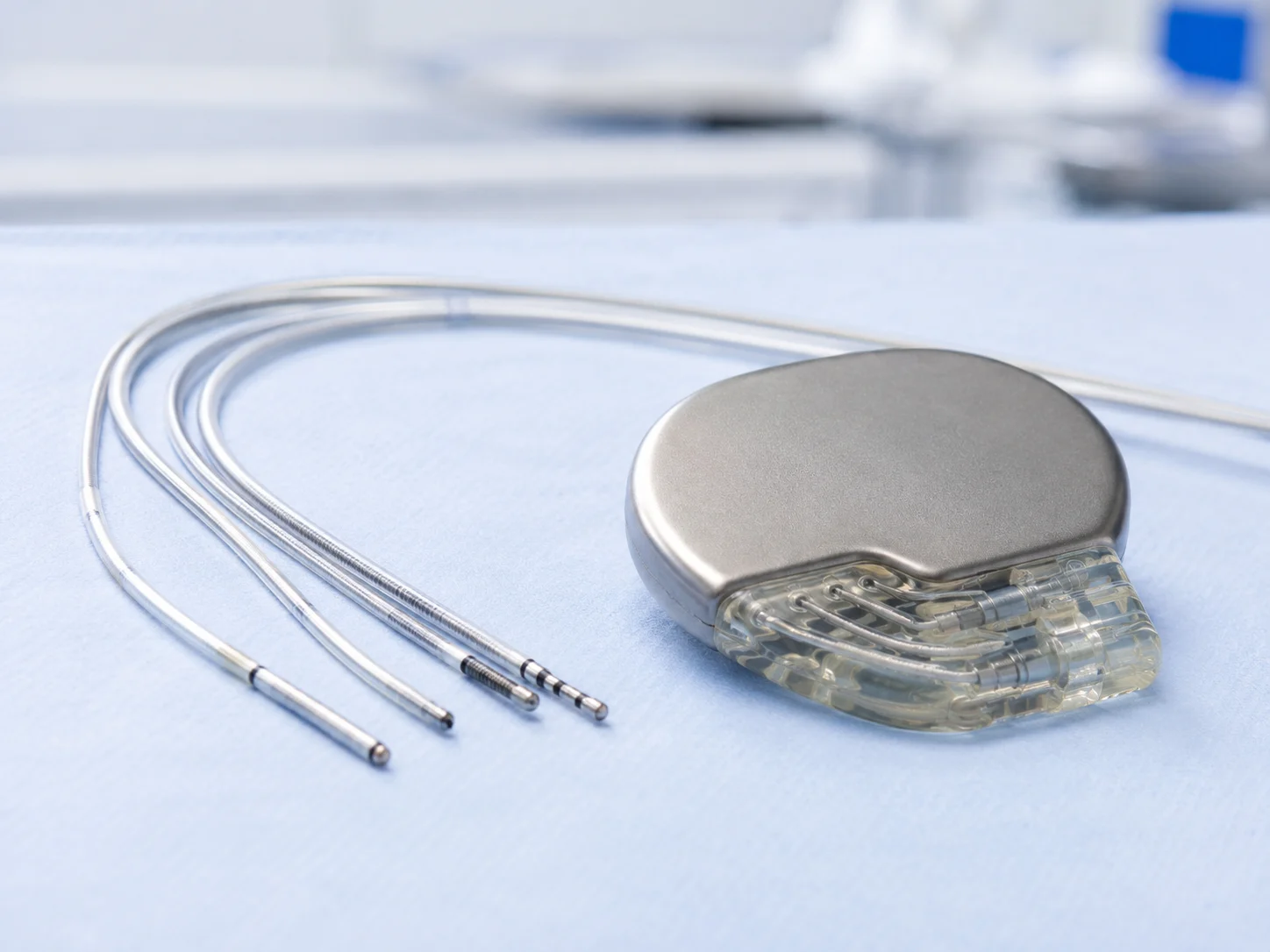
An implantable cardioverter defibrillator (ICD) is a small electronic device that watches the heartbeat around the clock and steps in if it detects a dangerous, abnormally fast rhythm coming from the heart’s lower chambers (the ventricles). These rhythms — ventricular tachycardia and ventricular fibrillation — can stop the heart from pumping blood effectively and are a common cause of sudden cardiac arrest. An ICD is designed to recognise such a rhythm within seconds and deliver therapy to restore a normal heartbeat.
An ICD has two parts:
- The generator — a small sealed metal box, a little larger than a pacemaker, containing the battery and the electronics that monitor the heart and store energy for a shock.
- The leads — one or more thin, insulated wires that carry signals between the generator and the heart, sense the rhythm, and deliver the pacing pulses or shock. (A subcutaneous ICD, described below, has a single lead placed under the skin rather than inside the heart.)
An ICD is often confused with a pacemaker. The key difference: a pacemaker mainly treats a heart that beats too slowly, while an ICD is designed to treat a heart that beats dangerously fast — though almost all ICDs can also pace a slow heartbeat when needed. An ICD does not treat blocked arteries and does not prevent a heart attack.
How Does an ICD Work?
An ICD constantly senses each heartbeat and compares the rhythm against the limits programmed by your electrophysiologist. It can respond in several graded ways, using the least aggressive therapy that will work:
- Monitoring and backup pacing — most of the time the ICD simply watches. If the heart beats too slowly, it paces it like an ordinary pacemaker.
- Anti-tachycardia pacing (ATP) — for some fast rhythms the device delivers a rapid, painless burst of pacing that can quietly restore a normal rhythm without a shock.
- Defibrillation — for the most dangerous rhythm (ventricular fibrillation), the device delivers a high-energy shock to reset the heart. This is the same life-saving treatment given by an external defibrillator, delivered automatically from inside the body.
The whole sequence happens automatically within seconds. After any shock the event is recorded and can be reviewed at a device check or by remote monitoring.
When Is an ICD Needed?
An ICD is recommended for people at risk of dangerous fast rhythms from the heart’s lower chambers. A specialist assessment — including an ECG, a 2D echocardiogram to measure the heart’s pumping strength, and often a Holter (prolonged ECG) monitor or other tests — is needed to decide if an ICD is appropriate. Indications fall into two broad groups:
Secondary prevention (you have already had a dangerous event)
- Survived a sudden cardiac arrest not caused by a reversible problem
- A documented sustained ventricular tachycardia or ventricular fibrillation
- Fainting (syncope) found to be caused by a dangerous ventricular rhythm
Primary prevention (you have not yet had an event but are at high risk)
- A significantly weakened heart muscle (a low ejection fraction), often from a previous heart attack (ischaemic cardiomyopathy) or other heart-failure causes (non-ischaemic cardiomyopathy).
- Certain inherited heart-rhythm conditions — for example, hypertrophic cardiomyopathy, long QT syndrome, Brugada syndrome, arrhythmogenic right ventricular cardiomyopathy, or catecholaminergic polymorphic ventricular tachycardia — where the risk of a dangerous rhythm is high
Whether an ICD is right for you depends on your individual risk, your heart function, your other conditions, and your own wishes after a full discussion with your consultant cardiologist.
Been told you may need a defibrillator? Discuss your options with Dr Paul Lim.
Types of ICD
The right type of ICD depends on your heart condition and is decided with your electrophysiologist.
| Single-chamber ICD | Dual-chamber ICD | CRT-D (biventricular ICD) | Subcutaneous ICD (S-ICD) | |
|---|---|---|---|---|
| Leads | One lead in the right ventricle | Two leads (right atrium + right ventricle) | Three leads (right atrium, right ventricle, left ventricle) | One lead under the skin over the breastbone — none inside the heart or veins |
| Typically used for | Protection from dangerous fast rhythms when no extra pacing support is needed | When atrial sensing or pacing is also required | Heart failure with dis-coordinated contraction of the ventricles. The aim of resynchronization is to deliver electrical impulses in areas that help to coordinate ventricular contractions and thus improve heart contraction efficiency and function | Patients who need shock protection but do not have pacing requirement. This is implanted to avoid wires in the heart, such as younger patients, those with difficulty placing leads into the heart, prior device infection, or congenital heart disease (abnormal cardiac structure from birth) |
| How it's placed | Leads are placed in the heart through a vein near the collarbone. The pulse generator (battery) is positioned under the skin of the chest below the collar bone. | The leads are placed just under the skin above the breastbone. The pulse generator (battery) is located at the side of the chest. | ||
| Note | Simplest defibrillator configuration | Allows more detailed rhythm discrimination | Treats heart failure and protects against sudden cardiac arrest | Cannot provide long-term pacing for a slow heart rate or anti-tachycardia pacing; suitability assessed individually |
Am I a Candidate for an ICD?
Your suitability is determined during a consultation based on your symptoms, your test results (including how strongly your heart pumps), and your overall health and wishes.
An ICD may help if…
- You have survived a cardiac arrest or a documented dangerous ventricular rhythm not due to a reversible cause (secondary prevention)
- You have a significantly weakened heart muscle despite optimal medication (primary prevention)
- You have an inherited heart-rhythm condition that carries a high risk of a dangerous rhythm
- You have fainting that has been shown to be caused by a ventricular rhythm
An ICD may not be the right choice if…
- Your dangerous rhythm had a reversible cause that can be corrected (for example, a severe electrolyte disturbance or a problem at the time of a heart attack)
- Another serious illness means an ICD is unlikely to provide meaningful benefit — this is a careful, individual discussion
- An active infection is present — this must be treated before any device is implanted
For some patients an ICD is offered alongside other treatments such as medication or catheter ablation, rather than instead of them.
How ICD Implantation Is Performed
ICD implantation is a minimally invasive procedure carried out in a cardiac catheterisation or electrophysiology laboratory. It is not open-heart surgery. A standard transvenous ICD usually takes about 1 to 2 hours; a subcutaneous ICD can take a little longer.
Before the procedure: You will usually be admitted on the day of the procedure after fasting for about 6 hours. Blood thinners may need to be stopped a few days beforehand on your specialist’s advice. Antibiotics are given through a drip to reduce the risk of infection.
-
1
Preparation and anaesthesia
Conventional defibrillators are usually implanted under local anaesthesia and sedation. Our staff will have you lie down on table with monitoring attached. Local anaesthetic numbs the skin below the collarbone and sedation is given so you are relaxed and drowsy. A subcutaneous ICD is more often placed under general anaesthesia.
-
2
Small incision
A small incision is made in the upper chest, usually on the left side, to create a pocket under the skin for the device in a tranvenous ICD. For a subcutaneous ICD the incision is placed on the left side of the lower chest to allow the device to sit at comfortably at that position.
-
3
Lead placement
For a transvenous ICD, one or more leads are guided through a vein into the correct chambers of the heart under X-ray guidance. A subcutaneous ICD lead is tunnelled under the skin instead, with no leads entering the heart or veins.
-
4
Connecting and testing
The leads are connected to the generator, which is placed in the pocket. The device is checked to confirm it senses the rhythm correctly; in selected cases the team may test that the device can detect and stop a dangerous rhythm.
-
5
Closure
The incision is closed with sutures, usually dissolvable, and a dressing is applied. A chest X-ray confirms the position of the device and leads.
-
6
Recovery in the ward
You rest and are monitored, typically staying overnight and going home the next day. The device is checked and programmed before discharge.
ICD Recovery Timeline
Most patients recover quickly. Here is a typical recovery schedule after an uncomplicated ICD implantation.
-
1Day 0 — Procedure day
Rest in the ward
You rest with a dressing over the site. Mild soreness or bruising at the implant site is normal.
-
2Day 1 — Discharge
Home the next day
Most patients go home the day after the procedure once the device check and X-ray are satisfactory.
-
3Week 1
Return to desk work & gentle arm use
Keep the wound clean and dry. Simple pain relief such as paracetamol is usually enough. Most people return to desk-based work within about one to two weeks. Gentle, normal use of the arm for daily activities (washing, dressing, eating) is encouraged from day one. From the start, avoid heavy lifting (more than about 2–3 kg on the implant side) and vigorous overhead or repetitive arm movements for about 4 weeks while the leads settle.
-
4Weeks 2–4
Keep the implant-side arm easy
Continue to avoid heavy lifting and vigorous overhead movements on the implant side, while using the arm normally for everyday tasks. The wound continues to heal; prolonged strict immobilisation is not advised, as it offers no added safety and can cause shoulder stiffness.
-
5Weeks 4–6
First device check
A follow-up check confirms the device settings and that the wound has healed. Normal arm movement and lifting can usually resume once the leads have settled. Your specialist will also advise you on driving (see below).
-
6Long term
Ongoing monitoring
Regular device checks (in clinic or by remote monitoring) continue for the life of the device, so the battery and leads can be monitored and the settings fine-tuned.
What Does an ICD Shock Feel Like?
Not everyone with an ICD will ever receive a shock — the device may simply monitor for years, or correct a rhythm painlessly with anti-tachycardia pacing. If a full shock is delivered, people who are conscious often describe it as a sudden, strong thump or “kick” in the chest. It is brief, and it means the device has done its job and likely saved a person's life. If a dangerous rhythm has already caused a blackout, the shock is usually not felt at all.
Because a shock can be startling, it helps to have a plan agreed with your specialist: generally, after a single shock when you feel well you should contact the clinic for a device check, while repeated shocks, or a shock with ongoing symptoms such as chest pain, breathlessness or feeling unwell, should be treated as an emergency. Your care team will give you clear, written guidance for your situation. Support is available if shocks cause anxiety.
ICD Risks and Complications
ICD implantation is a well-established procedure with a strong safety record, and most complications are minor. Possible risks include:
- Bruising or bleeding at the device pocket (most common; usually minor)
- Pocket haematoma — a collection of blood under the skin that occasionally needs attention
- Infection of the device or pocket, which in serious cases may require the system to be removed
- Pneumothorax — a small air leak around the lung where the vein is accessed (transvenous ICD)
- Lead displacement — a lead moving out of position in the first weeks, sometimes needing repositioning
- Cardiac perforation — a rare injury to the heart wall (transvenous ICD)
- Inappropriate shocks — a shock delivered when it was not needed (for example, triggered by a fast but harmless rhythm or by device (rarely) malfunction. Careful, individual talored device programming and follow-up reduce the risk of recurrence.
- Reaction to the anaesthetic or contrast, or rarely, a blood clot in the vein
- Over the longer term, leads develop wear and tear or fail and may need replacement, and the generator is replaced when the battery runs low
Dr Lim will discuss your individual risks and obtain written informed consent before the procedure.
Have questions about an ICD? Dr Paul Lim is happy to help.
Living With an ICD
Most people return to a full and active life with an ICD. A few practical points:
- Driving — driving restrictions apply after an ICD is implanted, and they are longer if the device was fitted after a cardiac arrest or dangerous rhythm (secondary prevention) or after you have received a shock. The exact period depends on your situation and the prevailing regulations; your specialist will advise you. Private driving is usually allowed again after a defined symptom-free interval, while vocational (commercial) driving is more strictly restricted.
- Air travel and airport security — flying is safe. Walking through an airport security gate is fine, though the metal may set off the alarm; carry your device ID card, tell security staff, and do not linger by the gate or allow a hand-held wand to hover over the device.
- MRI scans — Almost all modern ICDs are “MRI-conditional” and allow MRI under specific safeguards; older devices may not be MRI-safe. Always tell the radiology team about your ICD so they can check the device first.
- Dental and medical procedures — routine dental treatment is generally safe. Always tell any doctor, dentist, surgeon, or physiotherapist that you have an ICD, as some equipment (for example, surgical diathermy) needs precautions.
- Everyday electronics — household appliances and mobile phones are safe; simply keep mobile phones a short distance from the device and avoid resting them directly over it. Take care around strong magnetic or industrial fields and certain security or anti-theft systems.
- An AED in an emergency — an automated external defibrillator can still be used on someone with an ICD; the pads are placed a few centimetres away from the device.
ICD vs Pacemaker, CRT and Other Treatments
Patients with heart rhythm problems are sometimes offered more than one type of device. Here is how an ICD compares with the main alternatives.
| Device / treatment | What it does | When it is used | How it differs from an ICD |
|---|---|---|---|
| ICD (implantable cardioverter defibrillator) | Watches for dangerous fast rhythms and delivers pacing or a shock to stop them — and can also pace a slow heartbeat | People who have survived, or are at high risk of, a life-threatening ventricular rhythm | — |
| Pacemaker | Sends impulses to prevent the heart beating too slowly | Slow or blocked rhythms (bradycardia, heart block, sick sinus syndrome) | A pacemaker only supports slow rhythms; it cannot deliver a life-saving shock. (See our pacemaker page.) |
| CRT-P (biventricular pacemaker) | Coordinates the heart’s pumping chambers to ease heart-failure symptoms | Heart failure with a weakened pump and an electrical delay, where shock protection is not required | Resynchronises the heartbeat but has no defibrillator |
| CRT-D (biventricular ICD) | Resynchronisation plus a defibrillator | Heart-failure patients who also need protection from dangerous fast rhythms | An ICD with an extra lead to resynchronise the pumping chambers |
| Subcutaneous ICD (S-ICD) | Delivers a shock without any leads inside the heart or veins | Patients who need shock protection but not long-term pacing | A type of ICD; avoids leads in the heart but cannot provide long-term pacing or anti-tachycardia pacing |
| Catheter ablation | An adjunctive treatment for dangerous electrical rhythms of the ventricles that can cause sudden cardiac death. Targeted ablation (Using heat/freezing/shocks to damage tissue) neutralises critical areas responsible for these abnormal rhythms. Does not replace defibrillators as the mainstay of sudden cardiac death in patients at risk of sudden death. | In patients with ventricular tachycardia and especially repeated ICD shocks, catheter ablation aims to reduce the risk of ventricular tachycardia recurrence. | Aims to treats the cause of abnormal ventricular rhythms; it is not sufficient protect against sudden cardiac arrest on its own. A defibrillator is still necessary. |
The right option depends on your specific rhythm problem, heart function, and overall health. Dr Paul Lim will discuss which device is most appropriate for you.
ICD Cost & Insurance in Singapore
- Single-chamber ICD One lead, to the right ventricle S$5,668 – 9,156
- Dual-chamber ICD Two leads, right atrium and right ventricle S$7,303 – 9,810
- Biventricular ICD (CRT-D) Three leads, adding left ventricular pacing S$8,502 – 12,426
- ICD replacement Generator change, existing leads left in place S$3,379 – 5,123
- MediSave claimable ICD implantation falls under MOH-approved surgical procedure limits.
- Integrated Shield Plans (IP) Generally covered by IP riders from Great Eastern, AIA, NTUC Income, Prudential, Raffles and others, subject to plan terms. We can help verify your coverage before admission.
- Pre-authorisation support Our clinic team can assist with insurance pre-authorisation and required paperwork, and provide an itemised estimate before your procedure.
ICD FAQ
Answers to the questions patients ask most often about ICDs, the implantation procedure, and living with the device.
What is an ICD?
An ICD (implantable cardioverter defibrillator) is a small, battery-powered device implanted under the skin near the collarbone. It monitors the heartbeat and, if it detects a dangerous fast rhythm, delivers pacing or a shock to restore a normal beat. It can also pace a slow heart.
What does ICD stand for, and what is an AICD?
ICD stands for “implantable cardioverter defibrillator”. “AICD” means “automatic implantable cardioverter defibrillator” — an older name for the same device.
How does an ICD work?
It continuously senses the heart’s rhythm. For a dangerous fast rhythm it can deliver a quick burst of painless pacing (anti-tachycardia pacing), a low-energy shock (cardioversion), or a high-energy shock (defibrillation), choosing the least aggressive therapy that will work. It also paces the heart if it beats too slowly.
What is the difference between an ICD and a pacemaker?
A pacemaker mainly treats a heart that beats too slowly. An ICD is designed to treat a heart that beats dangerously fast, by delivering a shock if needed — and almost all ICDs can also pace a slow heartbeat. They protect against different problems.
Who needs an ICD?
People who have survived a cardiac arrest or a dangerous ventricular rhythm (secondary prevention), and people at high risk of one — such as those with a significantly weakened heart muscle or certain inherited heart conditions (primary prevention).
What does an ICD shock feel like?
If you are conscious, a full shock is usually felt as a sudden, strong thump or kick in the chest. It is brief. Many rhythms are corrected painlessly by pacing, and if a blackout has already occurred the shock is often not felt at all.
What should I do if my ICD gives me a shock?
If you have a single shock and feel well, contact the clinic for a device check within 24 hours — this is usually not an emergency; the device has done its job. If you receive repeated shocks (two or more in a short time), or a shock with ongoing chest pain, breathlessness, palpitations, or feeling unwell, treat it as an emergency and call for urgent help. Your care team will give you a written action plan.
How long does an ICD battery last?
Most ICD batteries last about 5 to 8 years, depending on the device and how often it delivers therapy. The battery is checked at every follow-up and gives advance warning, so a generator change can be planned. The existing leads are usually kept and reused.
How long can you live with an ICD?
An ICD is designed to prevent sudden cardiac death from dangerous heart rhythms and can significantly extend life expectancy in high-risk patients. Overall longevity depends on the underlying heart condition and other health factors, but many people live for many years or decades with an ICD, with the device replaced as needed when the battery runs low.
Can I drive with an ICD?
Driving restrictions apply for a period after implantation, and they are longer if the device was fitted after a cardiac arrest or after you have received a shock. Your specialist will advise you based on your situation and the prevailing regulations. Vocational (commercial) driving is more strictly restricted.
Can I fly or go through airport security with an ICD?
Yes. Flying is safe. Walking through the security gate is fine, though the metal may set off the alarm. Carry your device identification card, tell security staff, and do not linger by the gate.
Can I have an MRI scan with an ICD?
Almost all modern ICDs are “MRI-conditional” and allow MRI under specific safeguards, including device reprogramming before and after the scan. Older devices may not be MRI-safe. Always tell the radiology team about your ICD so they can check the device model and coordinate with your electrophysiologist before scheduling the scan.
Can an ICD be removed?
Yes, if necessary. This involves lead extraction and generator removal, which is a specialised procedure and is more complex for leads that have been in place for many years. The most common reasons are device infection or lead failure.
Is ICD implantation painful?
The area is numbed with local anaesthetic and sedation is given (or general anaesthesia for a subcutaneous ICD), so the procedure is not usually painful. Some soreness or bruising at the site for a few days afterwards is normal and is well controlled with simple pain relief.
How much does an ICD cost in Singapore?
It depends on the type of device. Singapore’s Ministry of Health publishes a separate surgeon fee benchmark for each (inclusive of GST): a single-chamber ICD is S$5,668 – S$9,156 (TOSP code SD705H); a dual-chamber ICD is S$7,303 – S$9,810 (TOSP code SD703H); and a biventricular ICD (CRT-D) is S$8,502 – S$12,426 (TOSP code SD706H). Replacing an existing generator is S$3,379 – S$5,123 (TOSP code SD842H). The device, hospital facility fees, and anaesthesia are billed separately, and device cost varies by type. ICD implantation is MediSave claimable and usually covered by Integrated Shield Plans. View MOH benchmarks →
Discuss ICD Treatment
Book a consultation to find out whether an implantable defibrillator is appropriate for you.
Send Us a Message

Book an ICD Consultation in Singapore
Opening Hours
| Monday – Friday | 8:30 AM – 5:30 PM |
| Saturday | 8:30 AM – 12:30 PM |
| Sunday & Public Holidays | Closed |
By Appointment Only