Cardiovascular Risk
The Heart
- Lipid panel
- ApoB
- hsCRP
- Lp(a) — tested once (since it's genetically determined)
 Medically Reviewed By: Dr Paul Lim – MBBS, M.Med (Int Med), MRCP (UK), FAMS (Cardiology)
Heart disease often develops silently. A heart check-up can find risks before any symptoms appear. The packages below range from a straightforward baseline to a full assessment of the heart and the arteries feeding it. Whichever you choose, Dr Paul Lim goes through the findings with you afterwards, warmly and patiently.
A heart check-up is recommended for anyone with cardiovascular risk factors, but even individuals without obvious risks can benefit from a baseline assessment.
Heart screening packages are for people who feel well. Each one is a fixed set of tests, chosen in advance to look for risk you cannot yet feel.
If you have chest pain or tightness, breathlessness, palpitations, dizziness or fainting spells, book a consultation with Dr Paul Lim instead. Your tests are then chosen around the symptom, which can be a different set from any package. If you are weighing up whether yours need looking at, read when to see a cardiologist.
Chest pain that is severe, or that lasts more than a few minutes, needs emergency care. Call 995 or go to the nearest A&E.
From essential baselines to total cardiovascular mapping, select the level of insight you require.
| Test | Basic $368 |
Plus $628 |
Advanced $878 |
Comprehensive $1,578 |
Full $1,688 |
|---|---|---|---|---|---|
| Blood Tests ? | ✓ | ✓ | ✓ | ✓ | ✓ |
| ECG | ✓ | ✓ | ✓ | ✓ | ✓ |
| Treadmill Stress Test | ✓ | ✓ | ✓ | — | — |
| Transthoracic Echocardiogram | — | ✓ | ✓ | ✓ | ✓ |
| Calcium Score | — | — | ✓ | ✓ | ✓ |
| CT Coronary Angiogram (CTCA) | — | — | — | ✓ | ✓ |
| Ultrasound Carotid Intima-Media Thickness (CIMT) | — | — | — | — | ✓ |
All prices shown are NETT and inclusive of 9% GST. Basic and Plus packages are available at both Orchard and Jurong; Advanced, Comprehensive and Full packages are available at Orchard only.
$1,688
Six tests covering bloods, ECG, transthoracic echocardiogram, calcium score, CTCA, and carotid ultrasound.
View Full Details →$1,578
Bloods, ECG, transthoracic echocardiogram, calcium score, and CT coronary angiogram. Ideal for a thorough structural and arterial assessment.
View Full Details →$878
Bloods, ECG, treadmill stress test, transthoracic echocardiogram, and calcium score. A solid mid-tier option with both functional and structural insight.
View Full Details →$628
Bloods, ECG, treadmill stress test, and transthoracic echocardiogram. Adds functional testing and heart imaging to your baseline.
View Full Details →$368
Comprehensive blood panel, resting ECG, and treadmill stress test — a solid baseline for assessing cardiovascular risk.
View Full Details →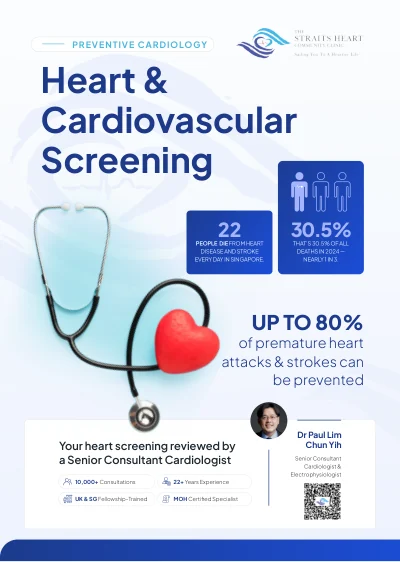
All five packages side by side, the 50+ biomarkers each blood panel covers, and the à-la-carte add-on prices, in a PDF you can keep or bring to your appointment.
Download the PDF
Still Deciding?
It depends on your age, your family history and the risk factors you carry. Dr Paul Lim can make a personalised recommendation.
Tell our doctor your concern:
Arrange a consultation with Dr Paul Lim to share your concerns and get peace of mind.
Something else on your mind?
Prefer a single test, or want to add one to your screening package? The following diagnostics are available a la carte.
| Test | Price |
|---|---|
| Ultrasound Carotid Doppler At partner centres | $305.20 |
| Ultrasound Carotid Intima-Media Thickness (CIMT) | $163.50 |
| 24-Hour Holter Monitor | $272.50 – $381.50 |
| CT Calcium Score | From $403.30 |
| CT Coronary Angiogram Includes Calcium Score | From $1,384.30 |
All prices shown are NETT and inclusive of 9% GST. Add-on tests are subject to clinical suitability and scheduling availability. For consultation and standalone diagnostic test prices, see our cardiology fees.

Senior Consultant Cardiologist & Cardiac Electrophysiologist
Dr Paul Lim is a Senior Consultant Cardiologist who personally reviews every screening report and discusses your results in clinic. He has subspecialised in cardiac electrophysiology and heart rhythm disorders, with advanced fellowship training at Barts Heart Centre, London under Singapore’s HMDP award.
A heart screening (also called a cardiac screening or heart check-up) is a series of tests designed to evaluate your cardiovascular health before symptoms appear. Unlike a general health screening, a dedicated heart screening uses cardiac-specific blood markers, imaging, and functional tests to build a comprehensive picture of your heart’s structure, blood supply, electrical activity, and rhythm.
Many heart conditions — including coronary artery disease, atrial fibrillation, and cardiomyopathy — develop silently over years without noticeable symptoms. Early detection through screening allows for timely intervention, lifestyle changes, and medical treatment that can significantly reduce the risk of a heart attack or stroke.

Have questions about what a screening covers? Message us and we’ll walk you through it.
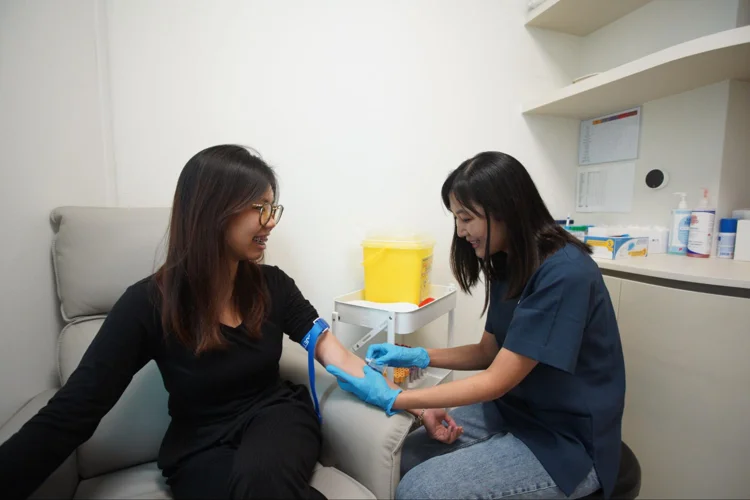
Every heart screening package includes a comprehensive blood panel targeting cardiovascular risk, metabolic health, and organ function. We go beyond standard metrics to give you a fuller picture.
The Heart
Energy & Processing
The Support Network
Understand what each diagnostic test measures and why it matters for your heart health.
A quick, painless recording of your heart’s electrical activity. Detects irregular rhythms, signs of previous heart attack, and structural changes. Takes under 5 minutes. Results are explained at your review — including what an abnormal ECG means if yours is flagged.
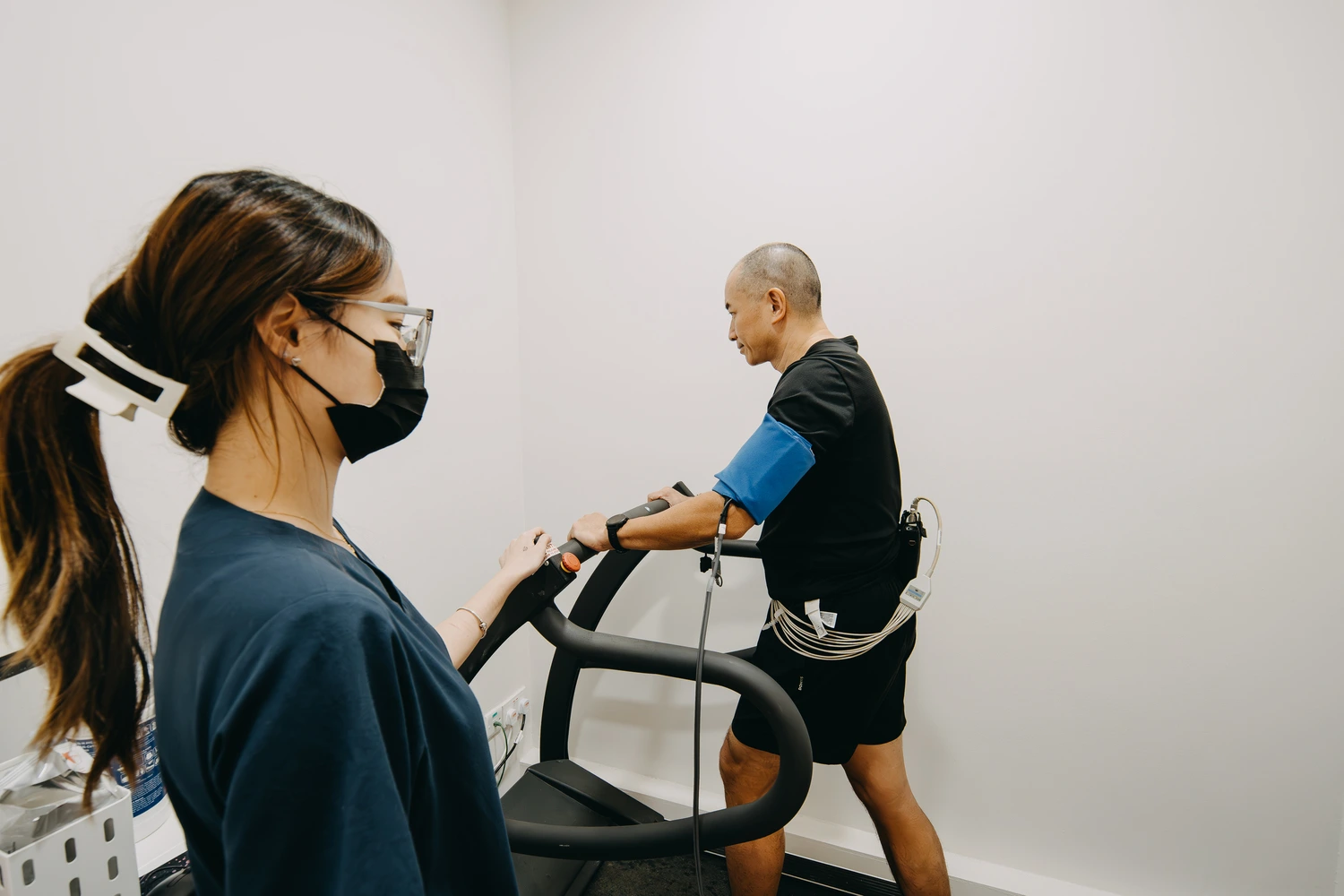
A treadmill stress test monitors your ECG, heart rate, and blood pressure while you walk on a treadmill at increasing speed and incline. Reveals exercise-induced ischaemia or arrhythmias that may not appear at rest.
A real-time ultrasound of the heart that provides a moving, structural picture of your heart valves and pumping function. Non-invasive and takes approximately 20–30 minutes.
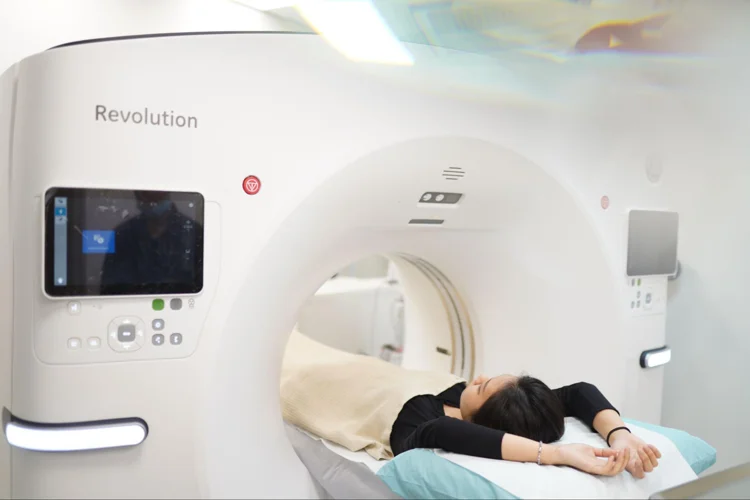
A low-dose CT scan that quantifies calcified plaque in your coronary arteries. A score of zero suggests minimal plaque buildup. Quick, non-invasive, and takes about 10 minutes.
A CT coronary angiogram is a detailed CT scan that visualises the exact plaque buildup and blockages in the arteries supplying your heart. Provides a non-invasive alternative to catheter-based angiography for many patients.
An ultrasound of the neck arteries that measures arterial wall thickness. Thickening is an early marker of atherosclerosis and correlates with increased cardiovascular and stroke risk.
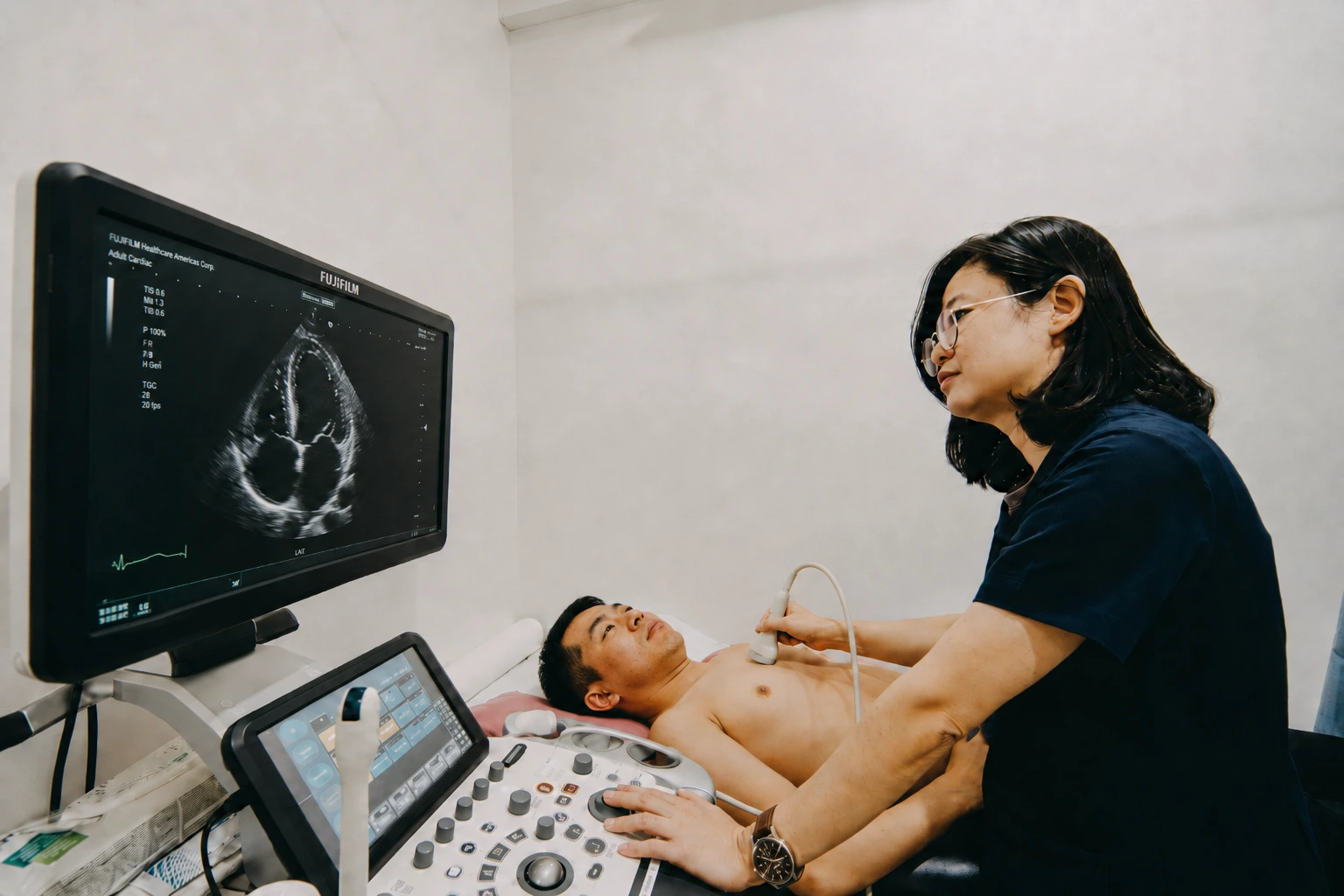
Not sure which package suits you? Speak to our team and we’ll help you choose.
Same-day appointments available. Minimal waiting time. All bloods, ultrasounds, and scans completed in a single clinic visit under one roof.
Our accredited physicians and laboratory process your comprehensive biomarker map and imaging results.
Fast results delivered within 7 working days. You receive a personalised, medically-sound health plan reviewed alongside your preferred doctor.
Cardiac diagnostics usually mean multiple appointments across different hospital departments. We bring everything to you. Consultation, blood tests, imaging, and stress testing are all completed in a single visit at one location.


Get every test done in one visit — same-day appointments at Jurong or Orchard.
Required for accurate blood test results. Water is fine. Avoid food, coffee, and sugary drinks from the night before.
If your package includes a treadmill stress test, wear comfortable walking shoes and loose-fitting clothes.
A list of all current medications and supplements helps the doctor interpret your results accurately.
For comprehensive and full packages, allow 3–4 hours for all tests to be completed in a single visit. Basic and Plus packages take approximately 60–90 minutes.
The best heart screening package is not the longest or the most expensive: it is the one matched to your age, risk factors, and symptoms. A healthy adult with no symptoms needs a different starting point from someone with a family history of heart disease, or risk factors such as high cholesterol, diabetes, or high blood pressure. Every package is reviewed with you by a cardiologist, so you leave knowing what your results mean and what, if anything, to do next. If you are unsure which one fits, tell Dr Paul Lim your concern and he will recommend one.
Five tiers, from a basic check to a full cardiac work-up. We can help you choose.
| Monday – Friday | 8:30 AM – 5:30 PM |
| Saturday | 8:30 AM – 12:30 PM |
| Sunday & Public Holidays | Closed |
By Appointment Only
Our heart screening packages range from $368 for a baseline package (blood panel, ECG, and treadmill stress test) to $1,688 for a full cardiac assessment that includes comprehensive blood work, ECG, transthoracic echocardiogram, coronary calcium score, CT coronary angiogram, and carotid ultrasound. The cost depends on the number and complexity of tests included. All prices shown are NETT and inclusive of 9% GST.
The Basic and Plus packages are available at both our Orchard (Camden) and Jurong clinics. The Advanced, Comprehensive, and Full Heart Check-Up packages — which include CT calcium score and/or CT coronary angiogram — are available at our Orchard clinic only, where CT imaging is performed on site.
A heart screening typically includes a comprehensive blood panel covering cardiovascular risk markers (lipid profile, ApoB, hsCRP, Lp(a)), metabolic health (fasting glucose, HbA1c), and organ function (liver, kidney, thyroid, full blood count). Higher-tier packages add a resting ECG, treadmill stress test, transthoracic echocardiogram, coronary calcium score CT, CT coronary angiogram, and a carotid intima-media thickness ultrasound. Every package also includes one consultation and one post-screening review with Dr Paul Lim to discuss your results.
A baseline heart screening visit (blood panel, ECG, and treadmill stress test) takes approximately 60–90 minutes. A comprehensive or full heart screening — which adds cardiac imaging and CT coronary angiography — is completed in a single clinic visit of 3–4 hours. All tests are done under one roof. Results are reviewed with your doctor within 7 working days.
Preventive health screening packages are generally not claimable under MediSave, as MediSave is reserved for treatment of diagnosed conditions. However, if a screening detects a condition that requires further investigation or treatment, those subsequent diagnostic tests and treatments may be MediSave-claimable. Our clinic team can advise you on the specifics.
A basic heart screening ($368) includes a comprehensive blood panel, a resting ECG, and a treadmill stress test — covering cardiovascular risk, metabolic health, organ function, and exercise-induced changes. A full heart screening ($1,688) includes the comprehensive blood panel, ECG, transthoracic echocardiogram, coronary calcium score CT, CT coronary angiogram (CTCA), and a carotid intima-media thickness ultrasound — providing a complete picture of your heart’s structure and blood supply.
A heart screening is recommended for adults over 40, or earlier if you have risk factors such as a family history of heart disease, high blood pressure, high cholesterol, diabetes, smoking, obesity, or a sedentary lifestyle. Athletes and individuals in high-stress occupations may also benefit from cardiac screening to detect silent conditions.
No referral is needed. You can book a heart screening directly with our clinic. During your visit, a cardiologist will review your medical history and risk factors to recommend the most appropriate screening package for you.
For individuals with no known heart conditions, a baseline heart screening is recommended at age 40, with follow-up screenings every 2–3 years. If you have risk factors (family history, hypertension, diabetes, high cholesterol, or smoking), annual screenings may be advised. Your cardiologist will recommend a personalised schedule based on your results and risk profile.
A general health screening covers a broad range of tests including blood counts, liver and kidney function, cancer markers, and basic cardiovascular markers. A dedicated heart screening goes deeper into cardiac-specific tests — additional lipid markers (ApoB, Lp(a)), cardiac imaging (transthoracic echocardiogram, calcium score, CTCA), and functional testing (treadmill stress test) — providing a far more detailed picture of your cardiovascular health.
A coronary calcium score is a low-dose CT scan that measures the amount of calcified plaque in the coronary arteries. A score of zero suggests no detectable plaque buildup. Higher scores indicate greater plaque burden and correlate with increased cardiovascular risk. It is a quick, non-invasive test that takes about 10 minutes and helps guide decisions about preventive treatment.
A heart screening package is designed for people who feel well. If you have chest pain or tightness, breathlessness, palpitations, dizziness or fainting spells, book a consultation with Dr Paul Lim instead. Your tests are then chosen around the symptom, which can be a different set from any package. Chest pain that is severe, or that lasts more than a few minutes, needs emergency care: call 995 or go to the nearest A&E.